Medical Repatriation: What Happens When You Get ill Far from Home? A Complete Guide to Private Medical Flights
Traveling is one of life’s greatest experiences, but what happens if you suffer a medical emergency while abroad? In critical situations like these, medical repatriation becomes the safest and most efficient solution to return home and receive specialized care. In this article, we explain everything you need to know about medical repatriation flights on private jets, an increasingly popular service in the United States and worldwide.
What Is a Medical Repatriation Flight?
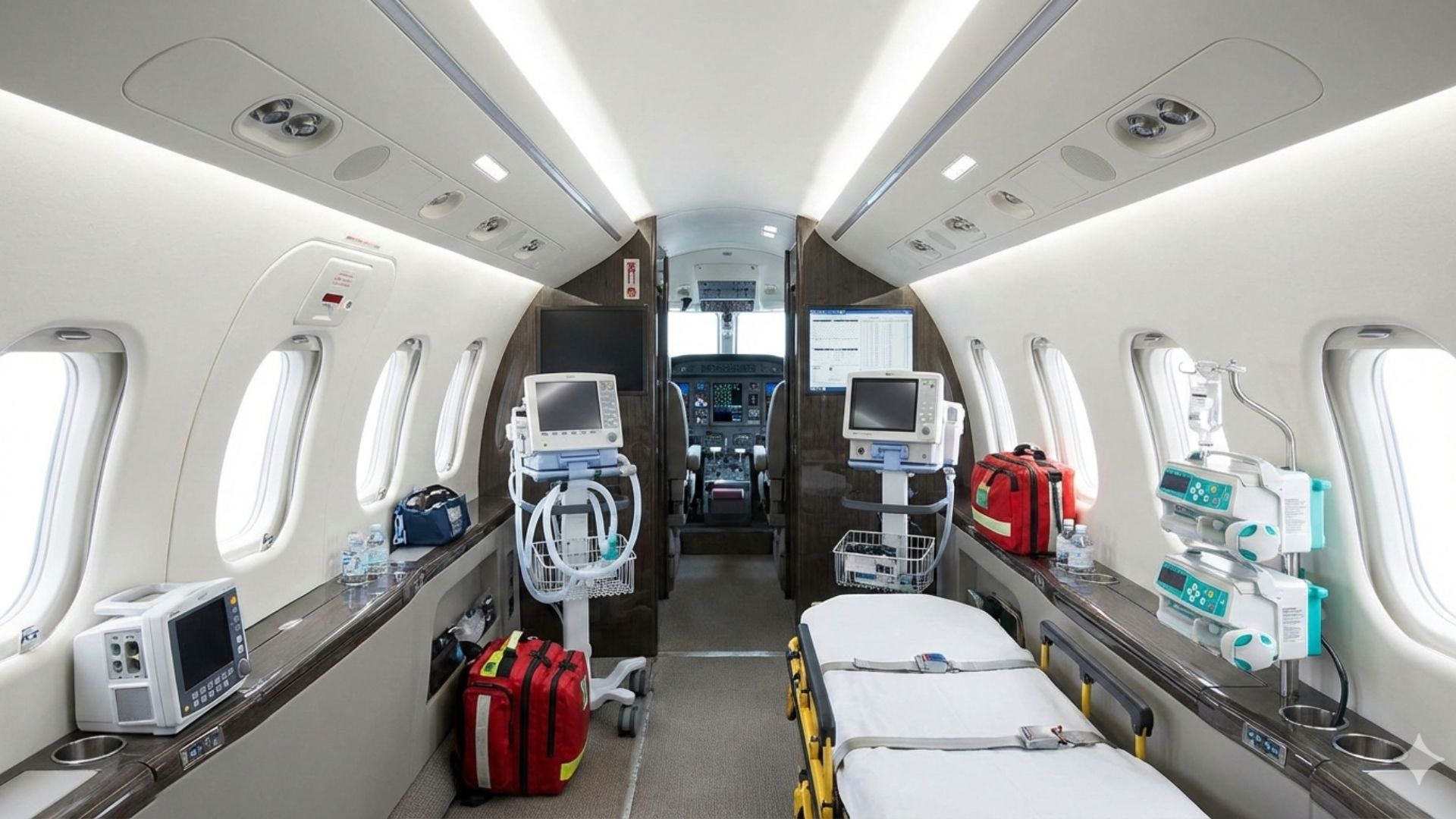
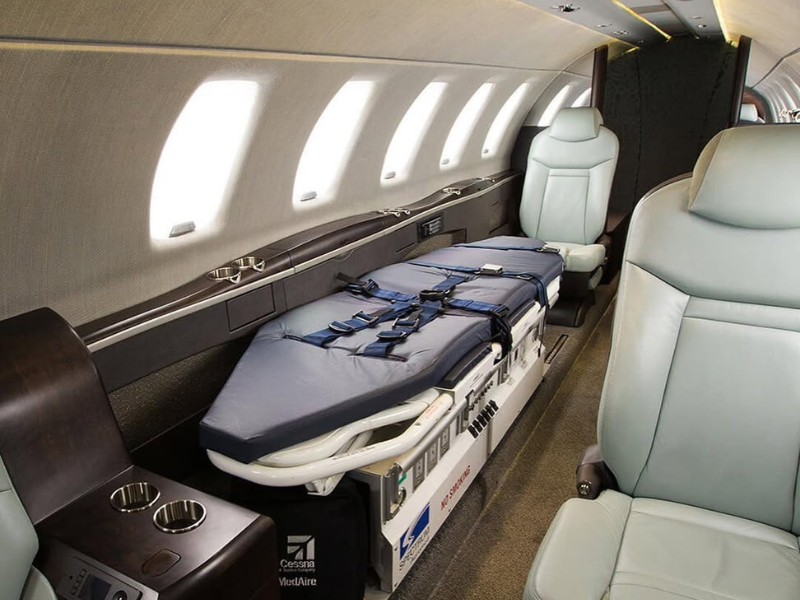
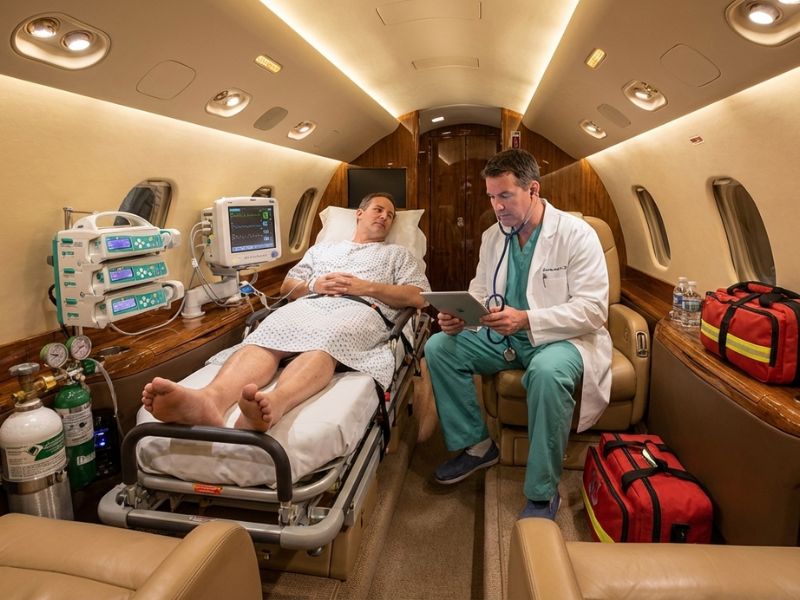
A medical repatriation flight is a special air service that transports a patient from the place (hospital or clinic) where they were injured to the closest medical facility. These flights are usually operated on medical private jets, equipped as airborne intensive care units.
Unlike commercial flights, private medical repatriation offers:
- Continuous medical care during the flight with a doctor and a paramedic monitoring the status of the patient.
- Advanced medical equipment on board.
- Flexible schedules and routes.
- Time saving.
When Is a Medical Repatriation Flight Needed?
Medical Repatriation is recommended when the patient:
- Has suffered a serious accident abroad.
- Has a medical condition requiring specialized treatment.
- Is not fit to travel on commercial airlines.
- Needs urgent medical evacuation to their home country.
- Is hospitalized in a healthcare system with limited resources to fulfill the treatment of the patient.
In these scenarios, private medical flights guarantee safety, speed, and medical continuity.
What Is the Process for Medical Repatriation?
The medical repatriation by private jet process usually follows these steps:
- Medical evaluation of the patient to confirm he is stable to fly.
- International logistics coordination (permits, visas, medical authorizations).
- Aircraft selection based on distance and medical needs.
- Medical team preparation (doctors, nurses, ICU equipment).
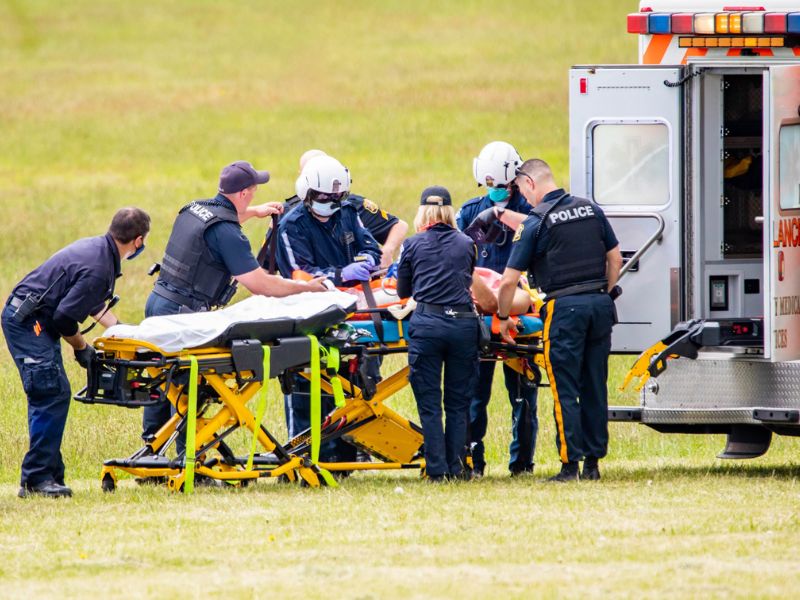
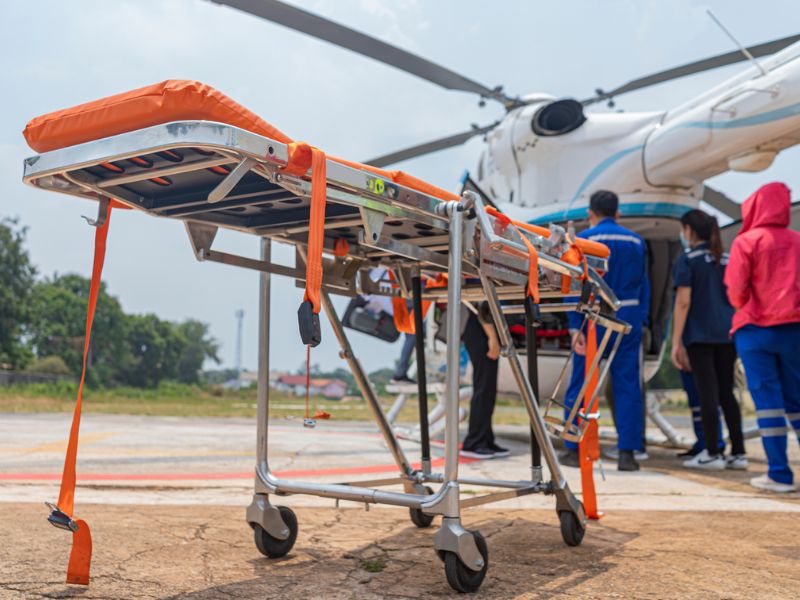
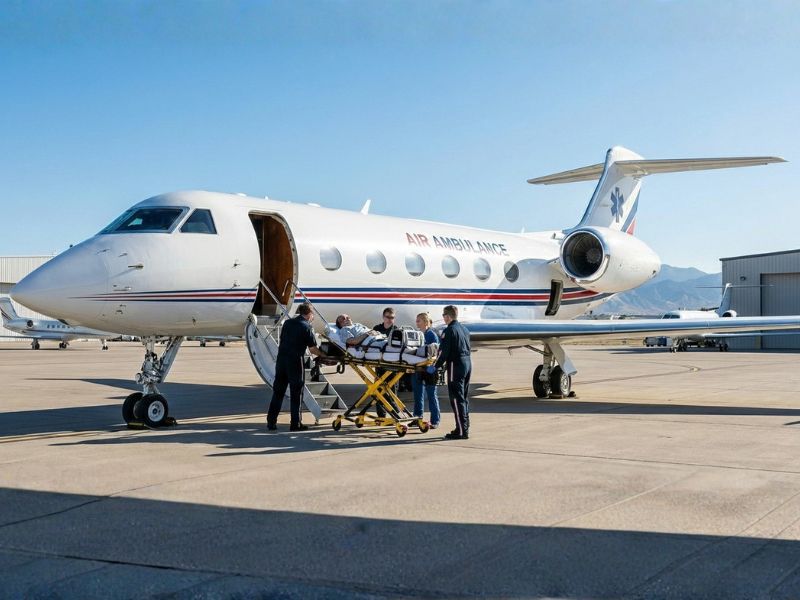
- Ground ambulance transfer to the airport.
- Medical repatriation flight.
- Arrival and hospital transfer at the destination.
Everything is handled by specialized medical aviation companies.
What Are the Requirements for Medical Repatriation?
To perform a private medical repatriation flight, the following is required:
- Updated medical report.
- Medical clearance to fly.
- Hospital discharge or transfer authorization.
- Patient identification documents.
- Receiving hospital confirmation.
- Medical insurance or financial guarantee.
Most air ambulance and private jet brokers manage all documentation.
Benefits of Using Private Jets for Medical Repatriation
Key advantages of private medical repatriation flights include:
- Immediate availability.
- Direct flights with no fuel stops.
- Full medical monitoring in flight.
- Greater clinical safety.
- Complete privacy.
- Access to secondary airports closer to the hospital or clinic.
- Family accompaniment if needed.
This makes private aviation the optimal solution for critical medical cases.
Why Choose a Private Jet for Medical Repatriation?
Choosing a private jet medical evacuation is not a luxury — it is a medical decision. Unlike commercial flights with limited medical assistance:
- There are no restrictions on medical equipment.
- The flight will be prepared for takeoff as soon as all permits are granted.
- The cabin is not shared with other passengers.
- Medical risks are significantly reduced.
In the United States, many private jet medical charter companies operate under FAA-certified medical standards.
How Much Does a Medical Repatriation Flight Cost?
The cost of medical repatriation by private jet depends on:
- Flight distance.
- Type of aircraft.
- Patient condition.
- Medical staff required.
- Specialized equipment.
- International permits.
Estimated price ranges:
- Regional flights (US – Caribbean): approximately from USD 21,000 and so on.
- Transcontinental flights (US – Europe): approximately from USD 100,000 and so on.
- Intercontinental flights (US – Asia): approximately from USD 200,000 and so on.
Many international health insurance policies partially or fully cover medical repatriation.
Medical Repatriation in the United States: A Premium and Life-Saving Solution
The United States is one of the global leaders in private medical aviation services, with a wide network of certified air ambulance and medical jet operators.
Through specialized private jet brokers, medical repatriation can be arranged worldwide within hours. With a portfolio of numerous options to present in each case and provide the solution with the aircraft closest to the point of departure.
Medical Repatriation Saves Lives
Medical repatriation via private jet is much more than a flight — it is a life-saving solution when health is at risk. Thanks to private aviation, patients can return home safely, quickly, and under continuous medical supervision.
If you or a loved one faces a medical emergency abroad, choosing a private medical repatriation flight can make the difference between a safe recovery and unnecessary risk.
Because when life matters, flying safely is the only option.  Contact Us.